Journal of Applied Robotics and Artificial Intelligence
Editorial Board
Thirteen researchers in robotics, control, machine learning and systems engineering hold editorial responsibility for what the journal publishes.
- 13 members
- Peer reviewed
- Open access
Leadership
Editor-in-Chief
The Editor-in-Chief holds final responsibility for editorial decisions and for the standards the journal applies to them.

Editor-in-Chief
Professor, University of Guelph, Guelph, ON · Canada
Intelligent Systems, Robotics, Control, Sensors, Neural Networks, Fuzzy Systems
ORCID 0000-0002-6888-7993
Members
The editorial board
Each member is listed with the affiliation and research interests held in the journal’s records. Their recorded interests run across control and systems theory, machine learning and intelligent systems, mechanism and design engineering, sensing and signal processing, and modeling and simulation.
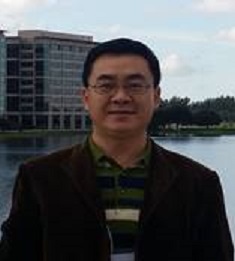
Professor, Peking University, Beijing · China
Embodied Intelligence, Machine Learning, Speech and Language Processing, Robotics, Humanoid Robots, Service Robots
ORCID 0000-0001-6997-3984

Associate Professor, Manipal University Jaipur, Jaipur, Rajasthan · India
Design Engineering, Design Optimization, Gait, Mechanism Design
ORCID 0000-0002-9303-7464

RMIT University · Australia
Robotic-assisted surgery, Intelligent algorithms, Soft tissue characterization and modeling, Surgical simulation, Bio/nano mechatronics, Sensing and measurement

Associate Professor, Faculty of Engineering and IT, University of Technology · Australia
Computational Intelligence, Bio-Mechatronics Systems, Health Technology and Biomedical, Vision based cancer diagnosing, Artificial Intelligent Systems

Researcher, Institute of Systems and Robotics · Portugal
signal processing, robotics, modeling and advanced inference learning techniques

Department of Mechanical and Industrial Engineering, The University of Toronto
Robotics, Mechatronics and Instrumentation

Universidad Politécnica de Madrid - Technical University of Madrid, Madrid · Spain
Control Theory, System Modeling, Mechatronics, Advanced Control Theory, System Identification, Control Systems
ORCID 0000-0002-8786-5511
Associate Professor of Computer Science and Artificial Intelligence, Ain Shams University, Cairo · Egypt
Machine Learning, MATLAB Simulation, Classification, Robotics, Algorithms, Automation & Robotics
ORCID 0000-0003-3643-7338


Professor, Lappeenranta-Lahti University of Technology, Lappeenranta, South Karelia · Finland
Fuzzy data analysis, classification, feature selection and extraction, multicriteria decision making
ORCID 0000-0003-0124-6646

National Tsin Hua University · Taiwan
Intelligent agent, Machine learning, Bioinformatics
ORCID 0000-0002-4810-1244

Associate Professor, King Mongkut's University of Technology Thonburi, Bangkok · Thailand
Fuzzy Control, H∞ Control, Robust Control and Filtering, System and Control Theory, Energy Systems and their Applications, Wind energy systems
ORCID 0000-0003-1333-5646
Responsibility
What the board is responsible for
Editors assess submissions for scope and quality, select reviewers, weigh the reviews they receive and decide the outcome. They recuse themselves from manuscripts in which they have an interest, and those submissions are handled independently.
Manuscripts are assessed for scope, scholarly quality, methodological rigor, ethical compliance, and research integrity.
Single-blind by default; double-blind review is available on request.
Manuscripts that proceed to external peer review are normally evaluated by at least two independent subject-matter experts.
Decisions remain independent of fees, services, memberships, and editorial or reviewer roles.
Editorial Policies sets out the journal’s position in full, and For Editors describes what handling a manuscript requires.
Next
Where to go from here
- Editorial PoliciesEthics, corrections, conflicts of interest and research integrity.
- For EditorsWhat handling a manuscript requires.
- For ReviewersWhat a useful review contains.
- About the JournalWhat the journal is for, who reads it and who is accountable.
- Aims & ScopeThe subject areas a manuscript must fall within.
- Submit PaperThe routes by which a manuscript reaches the journal.
Researchers interested in joining the board are welcome to write to the editorial office at [email protected].